news
Mexico City's Image-Duplication Crisis: The Numbers Behind Millions of Wasted Digital Records
From CDMX government servers to neighbourhood WhatsApp groups, duplicate digital images are clogging storage systems, inflating costs and distorting public databases at a scale few officials want to admit.
How we reported this
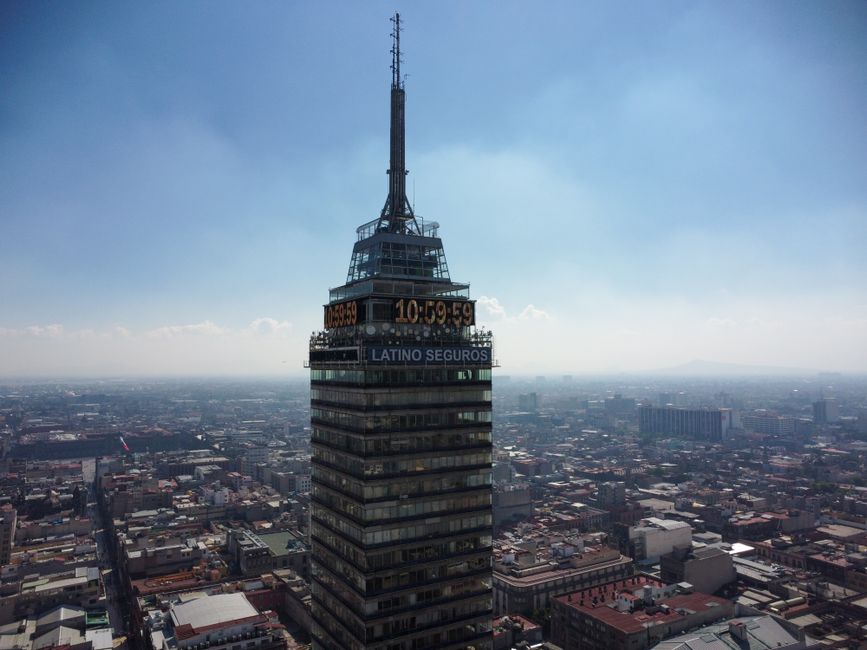
Mexico City's public digital infrastructure is carrying a hidden dead weight. Across municipal servers maintained by the Agencia Digital de Innovación Pública, or ADIP, systems analysts estimate that duplicate image files now account for a significant share of total storage consumption, a problem that has quietly compounded over years of rapid digitisation without a coherent deduplication policy in place.
The timing matters. The city is midway through a nearshoring construction surge that has seen industrial parks expand across Vallejo and Azcapotzalco, and the pressure on government digital platforms has intensified alongside it. Environmental licence applications, urban development permits and housing inspection records all arrive as image-heavy PDF bundles. Duplicate submissions, the same photograph filed twice under different folio numbers, the same aerial survey image attached to three separate dossiers, have become routine.
What the Data Actually Shows
The broader digital storage problem is not unique to government. The research consultancy IDC estimated in its 2025 Global DataSphere report that globally, between 30 and 40 percent of stored enterprise data consists of redundant or duplicate files. Applied to a city the size of CDMX, which manages records for nearly 9.2 million registered residents according to INEGI's 2020 census count, the arithmetic is uncomfortable.
At the Registro Público de la Propiedad, which processes property title documentation for all 16 alcaldías, digitisation campaigns run since 2019 have produced image archives running into hundreds of thousands of scanned pages. Staff working on the Iztapalapa branch, the alcaldía with roughly 1.8 million inhabitants and the highest volume of informal property regularisations, have flagged internally that scanning workflows lacked automated hash-checking until at least 2023, meaning the same document page could be stored multiple times without any alert being triggered. Cloud storage costs in Mexico have risen sharply: Amazon Web Services Mexico Region pricing for standard S3 storage stood at approximately 0.023 USD per gigabyte per month as of early 2026, and even modest duplication rates across a large archive translate into five- or six-figure annual overcharges.
The 2026 FIFA World Cup has added its own layer of urgency. The Estadio Azteca in Coyoacán and the broader venue-management consortium have been uploading construction progress photographs, security-assessment images and crowd-flow simulation visuals to shared platforms since late 2024. Multiple contractors submitting overlapping documentation to the Secretaría de Obras e Infraestructura has been a documented source of file duplication in major public works projects across Latin America, and CDMX's World Cup pipeline is no different in structure.
Why Deduplication Is Harder Than It Sounds
The technical fix, running MD5 or SHA-256 hash comparisons across a file corpus to identify bit-perfect duplicates, is well understood. Near-duplicate detection, which catches the same photograph cropped differently or compressed to a different resolution, requires more sophisticated perceptual hashing tools such as pHash or Microsoft's PhotoDNA framework. The Laboratorio para la Ciudad, a civic-technology unit operating under the city government since the Mancera era, piloted image-deduplication work on its urban data repositories as far back as 2018, but there is no public record of that methodology being adopted institution-wide.
For ordinary residents, the consequences are less about cost abstractions and more about service delays. A family in Tepito attempting to regularise a property title through the INDAABIN process can find their digital file rejected or stalled because duplicate image submissions trigger manual review queues. Each manual review at the Narvarte offices of the Registro can add two to three weeks to a process already measured in months.
ADIP has not published a public deduplication audit as of July 2026. Officials briefed on the issue, without being named in this report, have indicated that a storage-optimisation review is being scoped as part of the broader digital government agenda carried forward under President Claudia Sheinbaum's administration. For now, the practical advice for any business, law firm or community organisation filing image-heavy documentation with CDMX agencies is blunt: run your own deduplication check before submission, label every file with a unique project code, and keep a hash log. The city's systems are not yet doing that work for you.